What should you notice on a Ponte Pietra walk?
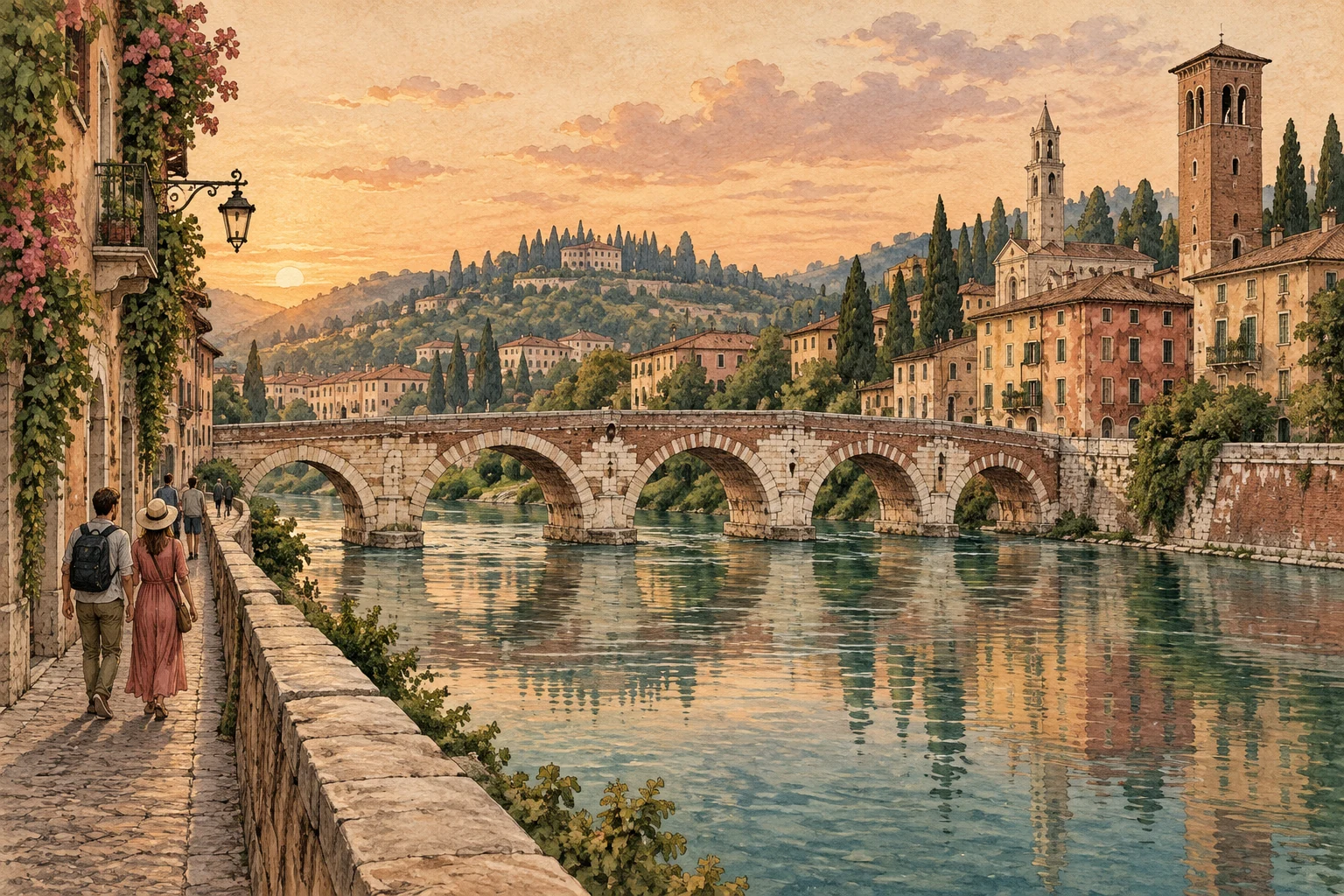
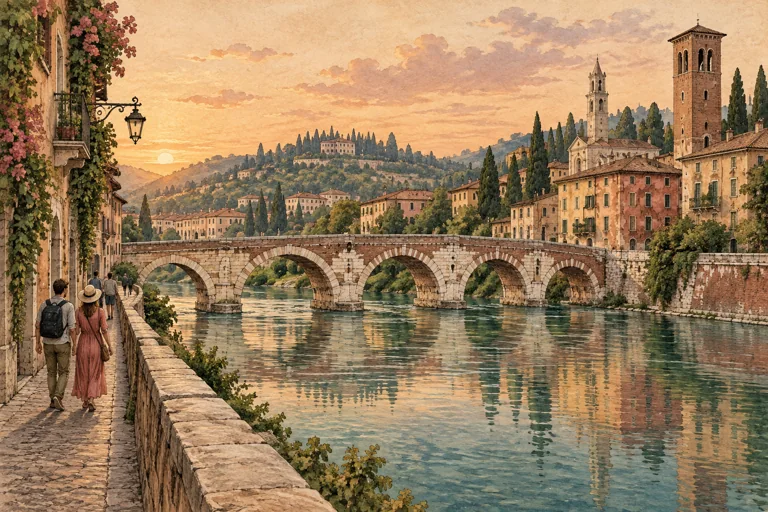
Ponte Pietra is an excellent place to practice slow sightseeing. A bridge gives you a clear subject, moving water supplies a changing background and the surrounding banks let you examine the same structure from several angles. You can make the walk brief or let it introduce a longer afternoon. Either way, the aim is to see more carefully rather than simply stop at the most familiar photographic position and move on.
Begin before you reach the bridge
Approach along a route that lets you see the bridge in relation to the Adige. Notice the direction of the river, the height of the banks and the way buildings meet the water. A city crossing is both a practical link and a point from which the surrounding settlement becomes easier to understand. The view is richer when the bridge remains connected to that setting.
Choose a place to pause without obstructing pedestrians. A narrow pavement or crossing is not the best place to arrange a large group photograph. If you are with children, set a clear stopping point and keep the group together near traffic and water. Our family Verona guide suggests ways to turn observation into a small game without making other visitors negotiate an obstacle course.
Look for difference rather than perfect uniformity
The bridge’s materials and forms invite a closer look. Instead of expecting every arch to look identical, ask why parts may differ. The official visitor material identifies Ponte Pietra as a Roman monument, while Verona’s wider history includes damage and careful reconstruction. What you see today belongs to that long history of use, repair and conservation.
This does not mean you need to assign a date to each visible stone. It means avoiding the assumption that a historic structure survives as a single untouched object. A guide can help distinguish the evidence. If you enjoy these questions, Roman Verona beyond the Arena connects the bridge with other remains and the city’s street pattern.
Cross, then look back
Walking across gives you a different sense of scale from viewing the bridge at a distance. Keep moving through congested sections and use wider spaces for longer pauses. Once across, look back toward the historic centre. The city’s layers become visible in a new arrangement, and a route that seemed straightforward on a map may feel quite different at ground level.
You can make a satisfying walk simply by comparing these two viewpoints. Pay attention to what appears between the buildings, how the water changes the light and which features become more prominent from the opposite bank. Repeating this habit at other places is a useful way to improve both travel photography and ordinary observation without buying anything or adding another ticket.
Decide whether to add a hill or an interior
Nearby routes can lead toward the Roman theatre and higher viewpoints, but a riverside stroll does not oblige you to climb. Consider your group’s energy, the weather and the actual access arrangements. Steps and gradients change the effort involved, particularly after a morning spent on foot. Check any transport or venue service you intend to use instead of assuming it operates at the moment you arrive.
A good plan includes a shorter version. If the hill feels unappealing, remain by the river and choose a café or a quieter street. Our short-visit collection is useful when you want a focused guided experience, while the day-planning page offers roomier frameworks. The bridge is an enjoyable destination, not merely the beginning of a mandatory climb.
Let the light shape the walk
Different times of day change how the water, façades and arches appear. There is no need to promise a particular sunset effect or an empty bridge. Weather, season and ordinary city life decide those details. Instead, give yourself enough time to notice the conditions you actually find. A cloudy afternoon can reveal textures that harsh light obscures.
If you come later, keep the return route simple and visible. Pair the walk with a meal that fits your location rather than crossing the city repeatedly. Verona after dark offers a gentle approach to that transition. Ponte Pietra works especially well as a final chapter: a place to look back, literally and figuratively, at the city you have been exploring.
Sources & further reading
Turn a good read into a great day.
Find a highly rated Veronese experience that brings these stories to life.
Explore related experiences →