What makes Verona a Roman city beyond the Arena?
The Arena is Verona’s most obvious Roman conversation starter, but it is not the whole conversation. A city’s past can survive in the shape of streets, the position of a crossing and the relationship between built spaces as well as in a spectacular monument. Once you begin looking for those connections, Verona becomes less like a collection of isolated sights and more like a long argument between geography, movement and architecture.
Start with the river and the street pattern
The Adige is a useful orientation device. It helps explain why a city developed around crossings and routes, and it provides a visible boundary against which to read the historic centre. On a map, compare the streets enclosed by the river’s curve with the broader city beyond. You do not need to identify every ancient alignment to notice that urban form can outlast individual buildings.
UNESCO describes Verona’s exceptional continuity across more than two millennia. Its World Heritage account identifies a group of Roman remains including gateways, the bridge, theatre and Arena. This is a useful framework, not an instruction to visit everything in one morning. Choose two or three places and investigate how they relate to one another. Our walking tours can help if you prefer an expert to connect the evidence.
Give gateways more than a passing glance
A gateway asks an interesting question: where did the city begin and end? A surviving façade may now stand among later buildings, making it easy to overlook the boundary it once marked. Look at scale, openings and the relationship with the current road. These observations are more useful than assuming that everything visible belongs to a single construction campaign.
Ask a guide which parts are ancient, which were reconstructed and which are later additions. That distinction does not reduce the pleasure of seeing the place. It makes the history more precise. Cities maintain, reuse and reinterpret their fabric; recognizing those interventions is part of understanding a living settlement rather than imagining an untouched archaeological diagram.
Cross Ponte Pietra with a question in mind
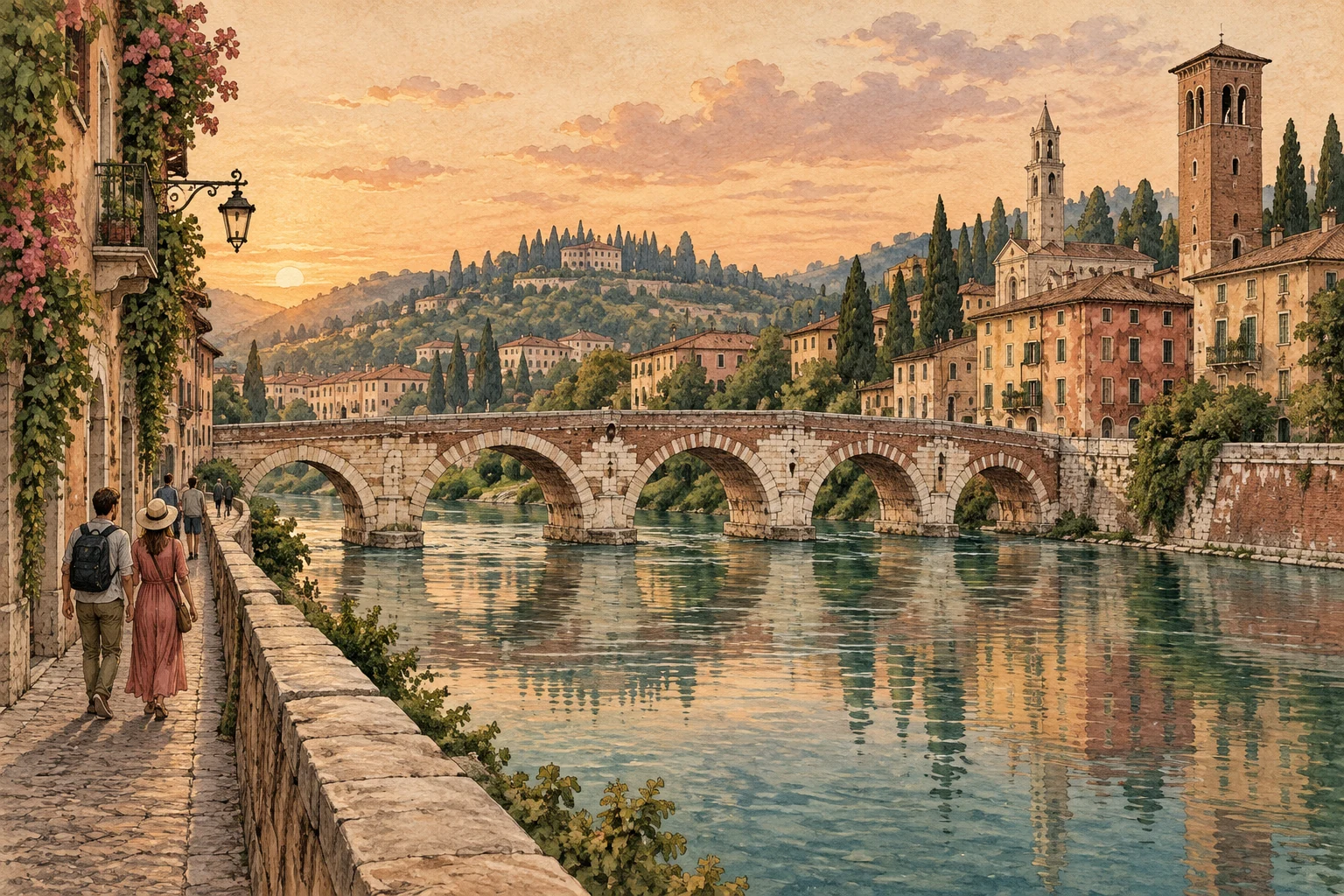
A bridge is infrastructure before it is a postcard. From a suitable public viewpoint, look at the arches, changes of material and how the crossing meets the banks. Then cross without stopping in the narrowest places. Our Ponte Pietra guide explores how to enjoy the river setting while noticing the bridge’s layered history.
Try looking back after you have crossed. The new angle often clarifies how the river separates and connects different pieces of the city. A useful travel habit is to spend a few minutes seeing a familiar object from a second position before moving on to the next landmark. It costs nothing and often produces a better understanding than another hurried photograph.
Separate the theatre from the amphitheatre
The Roman theatre and the Arena are distinct sites, and their names should not be used interchangeably. A theatre visit and an Arena visit can involve different locations, tickets and access arrangements. Check the actual venue named in your chosen itinerary. This is especially important when a listing combines a walk with optional admissions.
The distinction also creates a richer question about Roman public life: different buildings supported different forms of gathering and performance. Let the architecture suggest questions about audience, movement and visibility. You do not need to reproduce an ancient event in your imagination with invented detail. Careful observation of the surviving spaces is already rewarding.
Connect ancient Verona with later Verona
A strong history walk does not end by pretending the medieval city never happened. It follows the relationship between layers. Continue to a central square or toward Castelvecchio and notice the changed architectural language. Our Castelvecchio article offers another way to think about buildings that have acquired new functions over time.
If your wider Italian journey includes Rome, the sister Colosseum Tour Hub can support a useful comparison. Compare how the monuments sit in their present cities rather than ranking them by size alone. Verona’s particular pleasure is the ease with which a river walk, an ordinary street and an ancient structure can belong to the same afternoon.
Turn the idea into a comfortable route
Choose a manageable start and finish, leave room for water and a meal, and check interior access before setting out. The day-planning page provides flexible frameworks. An attentive hour spent around a gateway and bridge can teach more than a breathless circuit. The aim is to leave with a clearer way of looking, not simply a longer list of Roman names.
Sources & further reading
Turn a good read into a great day.
Find a highly rated Veronese experience that brings these stories to life.
Explore related experiences →