Verona’s San Zeno antiques market: which Sunday should you go, and what is worth a second look?

The best purchase at Verona's San Zeno antiques market might be a postcard that costs very little and sends you looking for the corner of the city shown on its front. It might equally be nothing at all. The market gives you a reason to walk the neighbourhood looking at small objects as closely as you would usually look at buildings. The first useful decision is about the calendar. This is a recurring market in San Zeno, not something that appears in the historic centre every time a visitor has a spare Sunday.
Pick the right Sunday and the right square
The Comune di Verona's market information places the antiques and collectors' market on the first Sunday of the month, with August excluded from the regular schedule. Check the latest local notices if your visit depends on a specific edition. A normal pattern and the final arrangements for a particular day are different pieces of information. The city's district listing identifies several locations, among them Piazza San Zeno, Piazza Corrubbio and Piazza Pozza. Pick one named place as your meeting point. Saying simply that you will meet at the market leaves a good deal to chance.
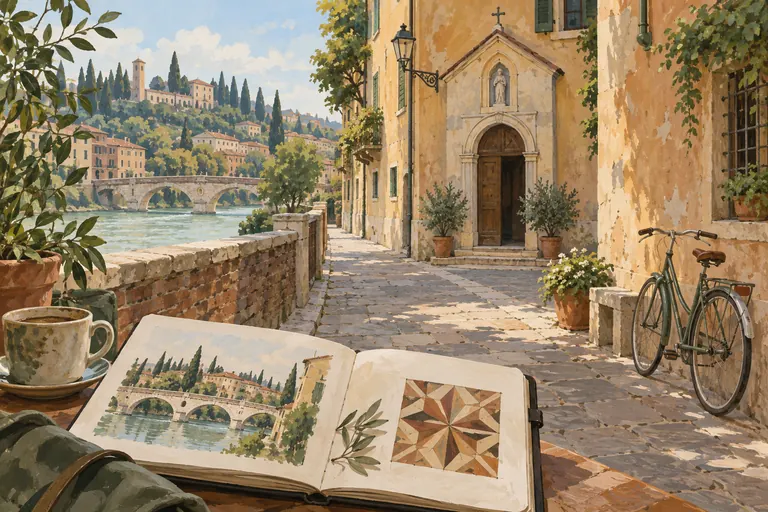
Approach the first tables without trying to take in every object. Old keys, printed cards, household utensils and small pieces of furniture all reward different kinds of attention. Decide on something you would enjoy finding even if you have no intention of buying it. A depiction of the Adige, a familiar street name or a piece that shows an ingenious repair gives a walk a loose theme. The mix of stalls and objects on a given day is the surprise. No individual item is guaranteed to be there.
How to look at an object without making up its past
Ask before handling a fragile piece or turning it over. If a seller calls a print old, ask which detail helps place it in time. A postcard postmark dates a postal journey. The photograph on the front may come from an earlier period, and a later print can reproduce an image from much further back. All three dates can be useful. Writing them as three separate possibilities will save you from telling a wonderful story that the object cannot support. A handwritten dedication is often interesting precisely because so much of its story is missing.
For a household object, search for the places the hand would have touched most often. A polished handle says something about use, but it cannot tell you who owned it. Ask whether a part has been replaced and whether the piece still works if that matters to you. Check the dimensions and weight before you fall for a chair or a lamp that looked conveniently small under the open sky. A picture of the object next to your bag can settle a surprisingly practical argument about luggage.
Put the market back into the neighbourhood
Leave room in your route for the buildings and people that are here on every other day of the month. The Basilica of San Zeno is a separate visit with its own hours and worship schedule. A market day does not grant entry or permission to photograph a service. If the basilica is central to your plans, check its arrangements first. San Procolo is another distinct stop. Resist making the morning so tight that a conversation at a stall feels like a delay.
Groups do well to make one circuit together and then allow a little time to separate. Someone comparing prints can spend twenty minutes within a few steps, while a companion interested in architecture may prefer the Porta San Zeno walk. Set a time at a recognisable corner and allow access for people carrying goods, pushing strollers or simply going home. The Verona walking tours collection offers ideas for extending the day. Check the route if you want a guided visit to include this neighbourhood.
Before leaving, take another look at the postcard if the seller still has it. Can you identify one piece of the view that remains and one that has changed? A market find does not have to be rare to be worth taking home. Sometimes its best feature is the very ordinary fact that somebody once stood on a Verona street, looked in a particular direction and considered the view worth sending to someone else.
Sources & further reading
Turn a good read into a great day.
Find a highly rated Veronese experience that brings these stories to life.
Explore related experiences →