Verona’s Borgo Trento: what can a neighbourhood walk reveal?

Borgo Trento changes the architectural conversation in Verona. After Roman monuments, medieval towers and Renaissance gateways, this residential district offers a way to look at the city around the turn of the twentieth century. The interesting details are often at the scale of a window, balcony or garden boundary. A short walk works best when you choose a few exteriors to study and allow the neighbourhood to remain a place where people live, rather than treating it as an open-house exhibition.
Where should an architectural walk begin?
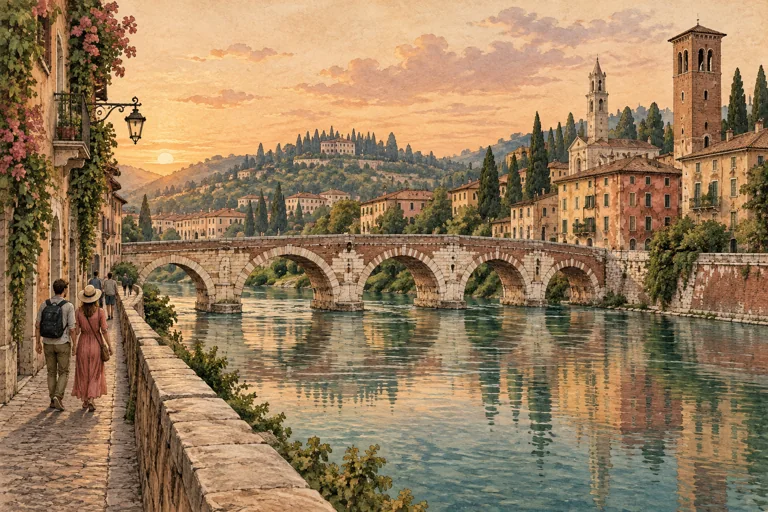
VisitVerona’s Borgo Trento introduction suggests crossing Ponte Garibaldi towards Viale Nino Bixio from the cathedral side. It places the district’s development in the late nineteenth and early twentieth centuries, when new residential building accompanied the growth of the city’s bourgeoisie. The broad historical setting helps explain why these streets differ from the older centre without requiring every building to fit one style.
Our cathedral-complex guide provides a distinct starting visit if that interests you, but a church admission is not necessary for the neighbourhood walk. Plan the crossing and the return on a current map. Decide how much walking you want before adding side streets, especially if the afternoon also includes a train, museum or performance reservation.
What does Liberty mean here?
Liberty is the Italian name associated with the wider Art Nouveau movement. In Borgo Trento, the official tourism account highlights Viale Nino Bixio and identifies Villa Tedeschi Tosadori as a 1915 design by Ettore Fagiuoli. It also points to Villa Cipriani and Villa Basevi on Via Anita Garibaldi, the latter with tower-like forms, broad windows and decorative ironwork. These are useful named anchors for further looking, not a promise that the houses can be entered.
A style name should help you see, not replace the work of seeing. Curving decoration, historical references and more restrained forms can sit near one another. Begin by describing what is actually in front of you. Which lines repeat? Does the ornament gather around an entrance or spread across an elevation? Where does the design change from structure to decoration, and is that boundary obvious?
Use the researched map without turning it into a marathon
A municipal account of the Verona Liberty mapping project describes research developed with the cultural association Verona Città Fortezza. The map brings together thirty-six buildings and explanatory material about the architecture. It provides a better basis for identifying a house than a passing resemblance to a photograph on social media. Consult current availability through the city’s visitor information.
Thirty-six entries are a resource, not an assignment for one afternoon. Select two or three examples close enough to compare comfortably. A focused route leaves time to discover differences within a shared period. It also makes it easier to change direction if temporary work, traffic or an unsuitable pavement affects the route. The map’s historical identification and the street’s current walking conditions answer different questions.
Try a balcony-sized exercise in close looking
Choose a balcony visible from the public pavement and look first at its overall outline. Then notice the pattern of the railing and the way it meets the supporting structure. Does the decoration seem to grow, branch, curl or repeat geometrically? Describe the effect before assigning a symbolic meaning. A leaf-like shape may invite a botanical comparison without documenting the architect’s intended plant species.
Now look at the window behind it. The balcony belongs to a working building, with openings, drainage and a relationship to the street. Ornament and practical use share the same object. This is where an architectural walk becomes pleasantly investigative: a modest detail can reveal several design decisions, and nobody needs to memorize an entire sequence of owners to begin enjoying it.
Notice what a façade cannot tell you
An exterior can suggest status, fashion or a relationship with neighbouring houses, but it cannot supply a complete social history. Use documented accounts for dates, architects and former residents. Avoid guessing the wealth, religion or personal lives of today’s occupants from an address or decorative style. The history of a district and the privacy of the people currently living there belong to different kinds of knowledge.
Keep to public space, avoid looking into occupied rooms and leave gates and entrances clear. A beautiful garden glimpsed beyond a fence remains private unless a specific authorized opening says otherwise. If you are photographing architectural details, frame the building rather than residents or personal possessions. A respectful walk needs no special access to be visually rewarding.
Choose a comparison that sharpens the experience
The San Giorgio in Braida guide offers a different architectural subject by the river. The Achille Forti gallery article introduces modern art in an older setting. Neither needs to become an obligatory addition; choose what advances your interest and fits the time available.
For a later lake visit, Villa Bernasconi in Cernobbio provides another documented encounter with decorative architecture, with its own public visiting arrangements. Browse Verona walking experiences for guided routes and confirm whether Borgo Trento is actually included. A successful neighbourhood walk may end with three buildings and one newly noticed pattern. That is plenty to carry back across the river.
Sources & further reading
Turn a good read into a great day.
Find a highly rated Veronese experience that brings these stories to life.
Explore related experiences →