San Zenetto in Verona: why does a stone in a small church recall a fisherman?

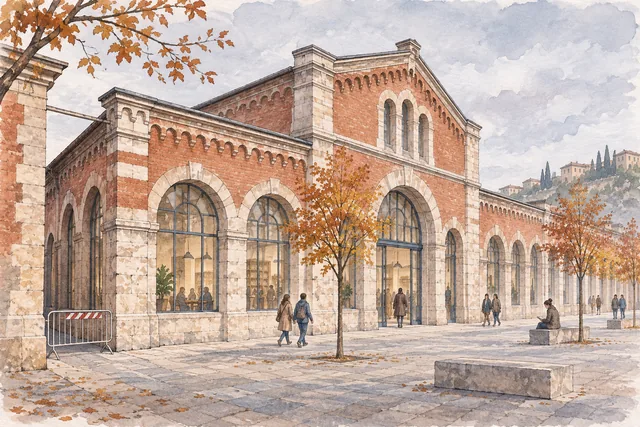
Two churches carrying the name of San Zeno can fit on one Verona itinerary, but they should not occupy the same pin on your map. San Zeno in Oratorio, also called San Zenetto, is a small church near Castelvecchio. The better-known basilica is another destination. The diminutive nickname is a kindness to visitors as well as a sign of local familiarity. It makes room for a much smaller story about a bishop, a stretch of river and a stone that tradition associates with fishing on the Adige.
Start with the name on the map
Write down both the full name and the nickname before leaving Castelvecchio. If you ask for directions using only San Zeno, someone may quite reasonably point you towards the basilica or the neighbourhood. The city's account of San Zeno in Oratorio places it near the castle and relates the tradition that Zeno came here to fish. Verona remembers him as a bishop and patron. A story attached to a place tells us how people have understood that place. It is different from a dated record of a particular day's fishing.
Approach the church with the river in mind. Today a visitor might think first of a quick crossing or a photograph beside the bridge. For those who worked and lived near the Adige, its level, banks and currents mattered in ways a short visit barely suggests. Take a moment to locate the water before you look for the entrance. Even if the doors are closed, the distance between this quiet stop and the river gives the local story a geography that an image of a saint cannot provide.
A stone with an unusual biography
The city identifies a stone associated by tradition with the place where Zeno sat to fish. Look at how that association changes the questions we ask of it. A geologist might begin with the material. A worshipper might begin with the saint. A historian might begin with the earliest account that connects them. None of those questions can be answered simply by looking for a mark that resembles a seat. The interesting part for a visitor is how a seemingly ordinary object can acquire a very strong identity through its setting.
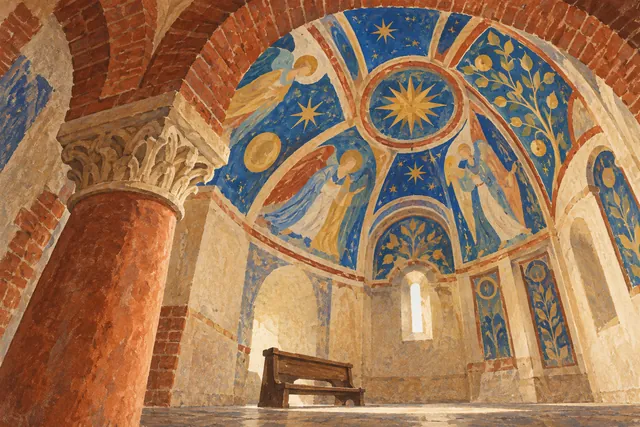
If a volunteer is present, ask how the local community tells the story. Let the answer stand as an account of a living tradition, with its own vocabulary. Then ask which features of the building have a firm date and which have been altered. The national heritage catalogue records medieval names and later changes in the life of the church, including a nineteenth-century closure and reopening. That record provides a different kind of time scale from the story of an individual beside the water.
Visiting a small church on its own terms
Access depends on the current visitor arrangements and the use of the church. Check the foundation's church information close to your visit. A volunteer itinerary is a real commitment by local people, and a timetable can change. If you find a service under way, give it the space it needs. If the building is closed, resist the temptation to treat a neighbouring doorway or courtyard as a second entrance. A few minutes outside and a return at an appropriate time are a perfectly respectable way to visit.
For an illuminating comparison, read about the Basilica of San Zeno and San Procolo beside it. These two stops belong to a different part of the walk. The short distances on a city plan can conceal how much time you will want to spend at each place once you arrive. Castelvecchio makes a convenient reference point for San Zenetto, particularly if another member of the party is spending time at the museum. Agree on the correct church name when setting a meeting place.
The Verona walking tours collection can help you decide whether to go independently or look for an itinerary that names the stop. Check the stated interior access if the stone is the reason for your trip. Whatever the day's arrangements, finish by looking towards the river once more. A city famous for a great amphitheatre and conspicuous medieval tombs also makes room for a story about someone sitting down beside the water. San Zenetto is one place where that difference of scale feels particularly welcome.
Sources & further reading
Turn a good read into a great day.
Find a highly rated Veronese experience that brings these stories to life.
Explore related experiences →