Verona’s Santi Apostoli: how do you read a church that has been rebuilt?

Historic churches often invite an impossible first question: what did this building originally look like? At Verona’s Santi Apostoli, a better opening question is what different periods have left visible. The church’s history includes rebuilding, rearrangement and wartime damage. Reading it as a layered place allows you to appreciate surviving forms without pretending that the present appearance belongs to one untouched moment. It also encourages a careful distinction between the main church and the nearby sacred space of Sante Teuteria e Tosca.
Begin outside with what you can actually see
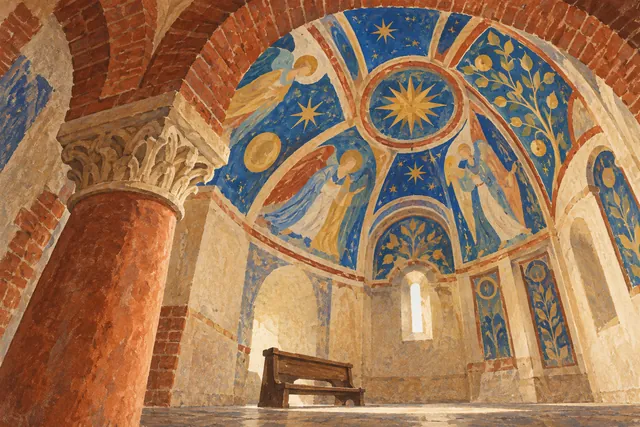
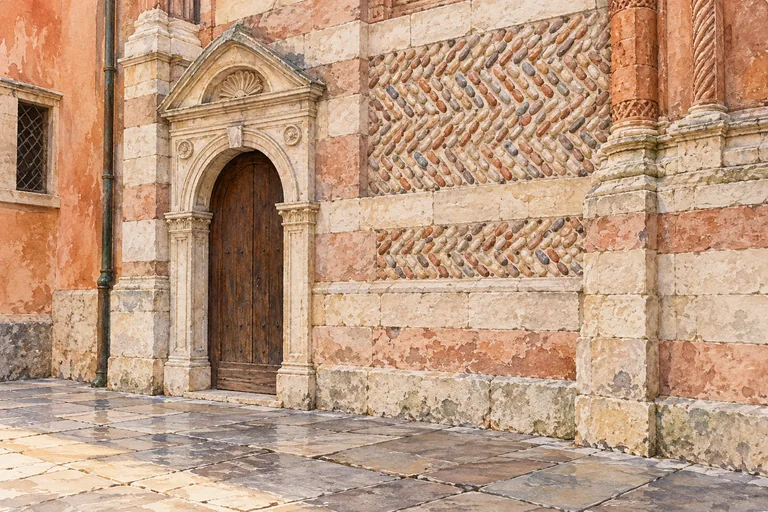
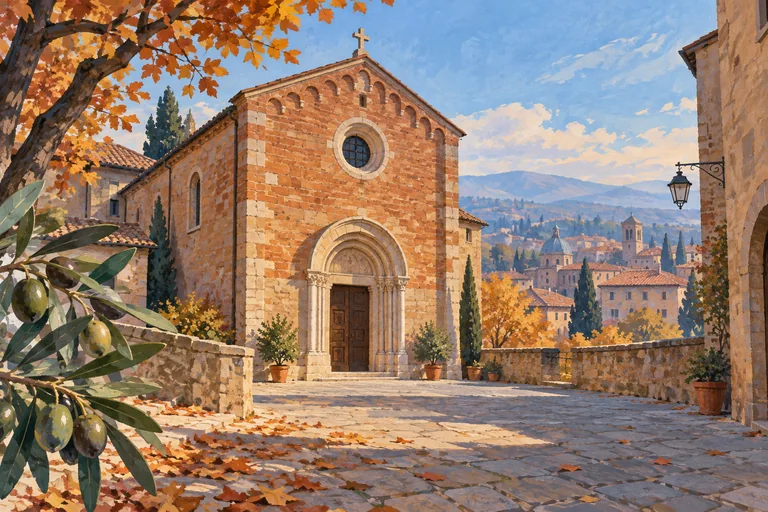
Verona’s official tourism account describes an early Christian foundation followed by medieval rebuilding, later alterations and restoration after the Second World War. It points to Romanesque exterior features, including walls, apses and the bell tower, while noting substantial changes to the interior. Use that account as a guide to questions rather than a licence to date every stone by eye.
Look first at the building’s relationship with its small square and surrounding streets. Which parts appear most enclosed? Where does the visitor entrance sit in relation to the church’s length? How do stone and brick meet? You can record those observations without deciding immediately which joint marks a repair or which surface is oldest. Weathering, cleaning and replacement can complicate appearances.
A simple sketch is useful even if drawing is not your talent. Mark the outline, the tower and one feature that catches your attention. Beside it, write the source of any historical claim you want to remember. Separating “I noticed this” from “the guide identifies this” produces a much clearer record than a photograph accompanied by a confident but unsupported date.
Rebuilding is part of the history
The tourism account records an interior rearrangement in the sixteenth century, followed by further changes in later centuries. That means the arrangement you encounter may not preserve the movement or sightlines of the medieval church. Rather than treating alteration as a distraction from an imagined authentic building, ask what a change allowed people to do differently. Where might attention have shifted? How does the present space organise a visitor or congregation?
These are questions, not conclusions you can settle from a quick look. Structural history needs plans, documents and specialist study. Still, a casual visit can reveal why “old” is an insufficient description. An ancient foundation, a medieval wall and a restored roof can all belong to the same living place. Our guide to Verona’s Ponte Scaligero offers a different setting for thinking about reconstruction and historical continuity.
For another church comparison, San Lorenzo provides a distinct Romanesque encounter. Avoid making one building the template against which every other church must be judged. The value of comparison lies in noticing differences in scale, access, materials and later use, not in awarding points for how closely a place fits an idealised period.
Keep Sante Teuteria e Tosca as a separate access question
National and local tourism descriptions connect Santi Apostoli with Sante Teuteria e Tosca. That historical association can make it tempting to assume that entering the main church includes the adjoining sacred space. The current Verona Minor Hierusalem information page is more specific: Sante Teuteria e Tosca is available through special openings, with visitors directed to current news for details. A general description or an older timetable is not confirmation of access on your date.
If that smaller space is the reason for your journey, find a dated opening announcement or obtain confirmation from the organiser before arriving. Check the meeting point, duration and any booking requirement. Do not infer permission to descend stairs or enter a closed area because you have seen photographs online. The exterior and the main church can still support a worthwhile visit when another space is unavailable.
The diocesan directory identifies the parish and its worship arrangements. Service times are useful for respectful planning, but they are not a museum timetable or a promise of unrestricted sightseeing. If a celebration is underway, follow local guidance and choose an appropriate moment for architectural looking. Church access remains connected to the needs of the community using it.
Connect the church with a modest city walk
Italy’s national tourism account places the church near the line of the ancient Via Postumia, associated here with today’s Corso Cavour. That gives the visit a useful urban setting without implying that every surviving street surface is Roman. Our Porta Borsari guide develops the nearby gateway’s own history. Keep the two stops focused, leaving time to notice how later buildings occupy the spaces between them.
If Bologna is also on your route, its brick-and-stone streetscape offers a broader comparison in reading materials carefully. For an organised Verona walk, compare the explicit stops in our history experience collection, including any access limitations. Santi Apostoli rewards a visit that accepts change as evidence. You need not recover one definitive original building to understand why the place has continued to matter.
Sources & further reading
Turn a good read into a great day.
Find a highly rated Veronese experience that brings these stories to life.
Explore related experiences →