Verona’s Santa Toscana: how do you plan around a small church’s limited visiting times?

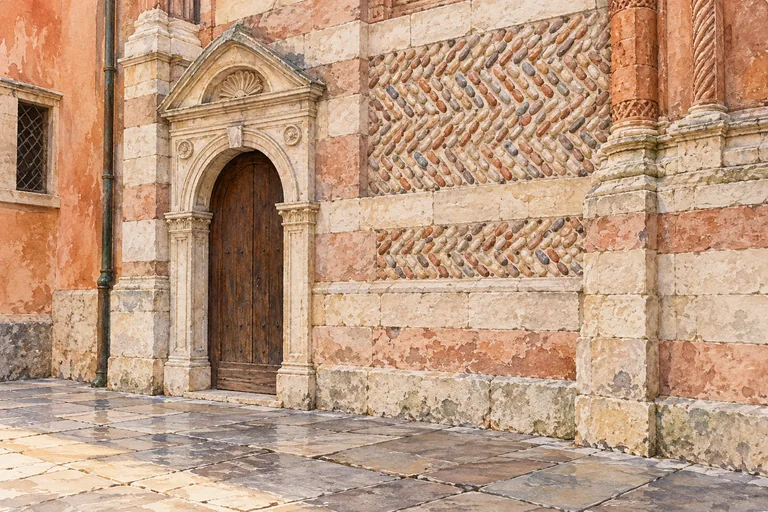
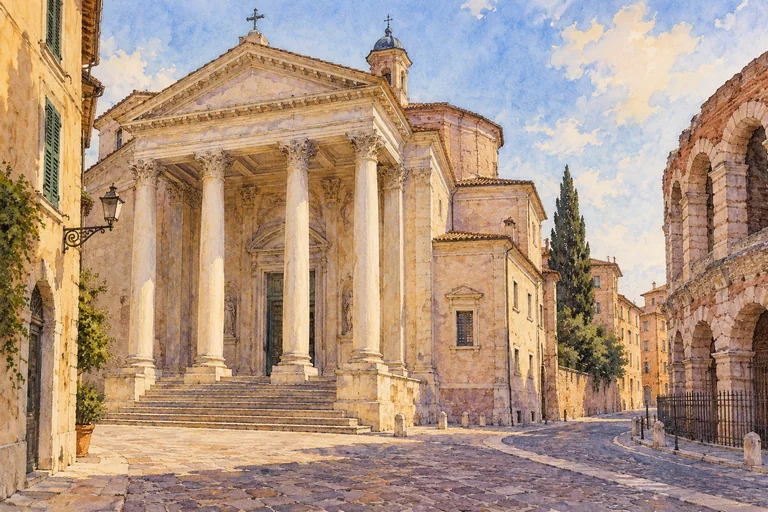
Santa Toscana makes a good case for planning a Verona visit around one modest place rather than around an ever-longer list. The church stands in Veronetta, on the eastern side of the city, and combines a history of care, pilgrimage and worship with a limited cultural-visiting schedule. Check that schedule first. If the available window fits your day, you can then give the building and its stories the unhurried attention they deserve.
Why was the church once associated with the Holy Sepulchre?
Verona Minor Hierusalem’s account describes the former church of the Holy Sepulchre beside a hospital run by the Order of Jerusalem. Its position along the urban stretch of Via Postumia connected it with travellers and pilgrims, while the hospital also served sick people from Verona. These overlapping roles are more interesting than treating the site solely as a monument to distant journeys.
Imagine the questions a historian would need to answer about such a place. Who was received, what kinds of care were provided and which records survive? The building’s name supplies an association, not a complete account of daily practice. Keep your interpretation anchored to the evidence offered by the institution or a guide, especially when a broad term such as “pilgrim hospital” risks making different centuries sound identical.
Who was Toscana?
The foundation relates the church’s later dedication to Toscana, who entered the Order of Saint John of Jerusalem after her husband’s death and worked with the sick poor. Its account places her death in 1344 and the rededication of the church in 1524. The diocesan directory confirms Santa Toscana as a present rectorate at Piazza XVI Ottobre 27. The remembered life and the continuing religious institution should both remain visible in your understanding.
When reading a saint’s life, distinguish the historical account, devotional tradition and the way a later community chose to commemorate it. You need not share a particular devotion to recognise that it shapes the building’s meaning for others. A visitor can ask careful questions without treating a place of worship as though its only purpose were to illustrate an art-history argument.
What deserves attention inside?
The visitor foundation identifies a Lamentation associated with Giovanni Zebellana and a triptych by Liberale da Verona among the church’s works. Rather than trying to collect every attribution, select one work and look at how its figures relate to one another. What directs the eye? How does the surrounding space affect the encounter? Then compare your observations with the available explanation.
Do not assume that a small church offers an unrestricted close-up of every object. Lighting, barriers, services or conservation needs can determine what is visible. A photograph taken during a special opening may show a viewpoint unavailable on a normal visit. If a particular artwork is the reason for your journey, ask about its current visibility before relying on it as the day’s main attraction.
What are the current visiting arrangements?
The foundation’s current Italian page lists Saturday visiting from 10:00 to 17:00, while its English version gives a 17:30 closing time. Free admission is supported by volunteers. These published closing times differ: confirm directly and plan to arrive well before 17:00. Worship information is listed separately. That separation matters: a Mass is not an alternative cultural opening, and an open door during a celebration is not an invitation to circulate as a sightseeing group.
Reconfirm the window close to your date, particularly around holidays. If you require a group arrangement, a particular language or an accessible route, ask specifically rather than assuming that general admission covers it. A request is not a confirmed booking. Follow the volunteer’s guidance on where to stand, whether photography is permitted and which areas are available that day.
How should you place it within Veronetta?
Allow the neighbourhood to remain a neighbourhood. Plan a realistic walk from your actual arrival point, with a break and a clear return route, rather than treating every church east of the river as adjacent. Stop without blocking pavements or residential entrances. A small square may be an attractive pause, but it also belongs to the people whose ordinary day continues around your visit.
Our guides to Porta Vescovo, San Tomaso Cantuariense and Santa Maria in Organo offer reading connections, each with its own access considerations. Choose a small number that actually fit rather than assuming that one opening schedule applies across the neighbourhood.
On a separate Milan visit, Ca’ Granda provides a different setting for considering the history of care. Compare local organised options through our Verona experience collection, checking what is expressly included. An Arena visit or opera ticket does not include this church. Santa Toscana rewards a quieter kind of itinerary: one confirmed opening, a few well-grounded observations and room to reflect on the connection between hospitality and place.
Sources & further reading
Turn a good read into a great day.
Find a highly rated Veronese experience that brings these stories to life.
Explore related experiences →