Verona’s San Giovanni in Foro: what can a small church reveal about a changing street?

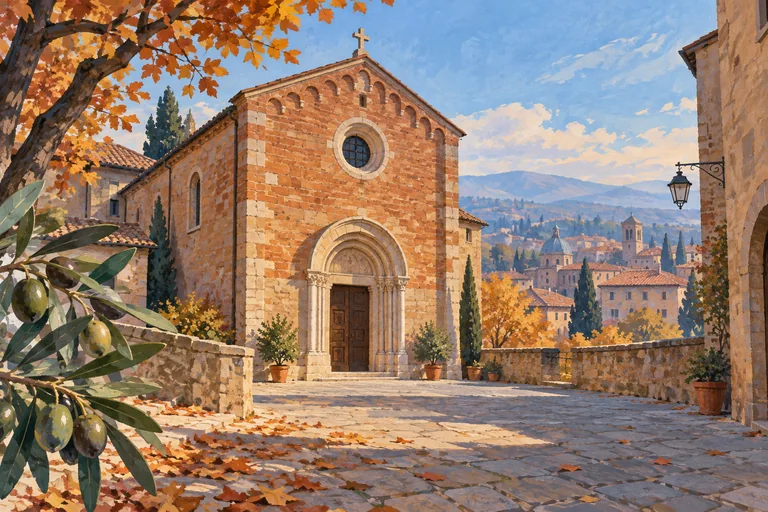
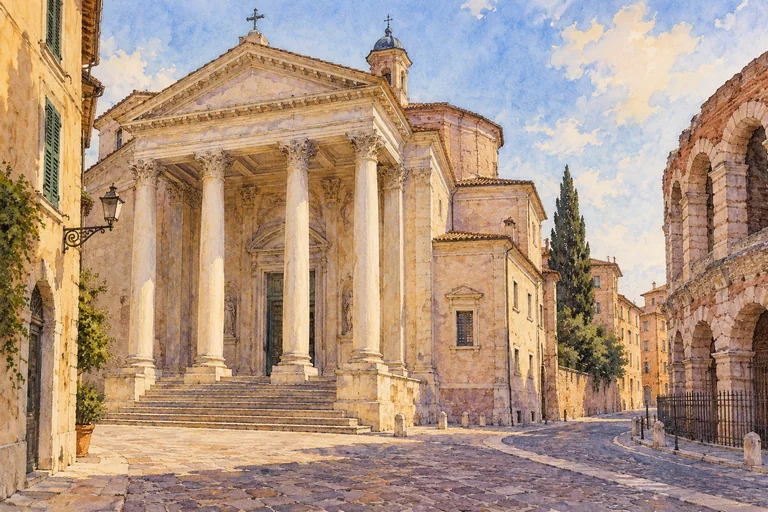
San Giovanni in Foro is the sort of Verona church that rewards slowing down on a street you might otherwise treat as a route between larger sights. Its scale makes a focused visit possible, but the story is not small: Roman urban geography, medieval masonry, a Renaissance doorway and later restoration all meet here. Start with the wall rather than a checklist of masterpieces. It offers a lesson in how a city reveals, covers and rediscovers its own fabric.
What does “in Foro” tell you?
The Comune di Verona’s account connects the name with the church’s position beside the ancient forum and on the Decumanus Maximus. The name is a clue to urban location, not a statement that the church itself is a Roman temple. Keep the history of the street and the history of the religious building separate before considering how they overlap.
At Corso Porta Borsari, look at the relationship between the church and the ordinary movement around it. People may be shopping, travelling to work or simply passing through. A historic building is not detached from that daily life because a visitor has arrived. Find a safe place to stop, leave entrances clear and take in a sequence of details without forcing everyone else to walk around a photography session.
Why is the exposed masonry important?
The municipal description records that Romanesque walling was uncovered in 1905 after exterior plaster came away and further removal followed. It identifies courses of tuff and herringbone pebble work. This makes the wall a record of both medieval construction and a much later decision to reveal it. What you see today was not necessarily what a passer-by saw a century earlier.
Try describing the arrangement before naming a style. Where are the stones regular, where does the pattern change, and how do openings interrupt it? Such observations give you something precise to compare with an authoritative explanation. They are more useful than declaring every exposed surface “original”. A building can preserve old material while the way that material is presented belongs partly to restoration history.
What does the doorway add?
The official visitor listing identifies the small Renaissance portal with Gerolamo Giolfino and its associated fresco with Nicola Giolfino. Their shared surname is a good reason to read carefully rather than assign every part of the entrance to one maker. The portal also shows why a church should not be reduced to the date of its earliest surviving masonry.
Look at the transition from wall to doorway. A frame can direct attention, establish a threshold and bring a later artistic language into an older structure. You do not have to know every sculpted figure to appreciate that relationship. If an identification matters to you, use the available explanation or ask a knowledgeable guide. Avoid touching stonework to demonstrate a detail; a close look from an appropriate distance is enough.
How should you handle the church’s historical episodes?
The municipal account associates the church with the fire that damaged Verona in 1172 and discusses an exterior inscription in that context. An inscription is evidence to read carefully, not a reason to imagine that every visible stone endured the same event in its present position. Buildings are repaired, materials are moved and later communities decide how earlier experiences should be remembered.
Choose one question to carry inside if access is possible: how does the interior relate to the exterior you have just studied? You might notice a different rhythm of spaces or a work with its own separate date. Do not insist that the whole church should look stylistically uniform. Its interest lies partly in the accumulated choices of people using the place over time.
When can you visit?
The current Visit Verona listing gives a Saturday cultural-visiting window of 10:00–17:30 and identifies participation in a Verona Minor Hierusalem itinerary. The older municipal entry more generally makes access subject to celebrations. Read those together and confirm the current arrangement before travelling specifically for entry. A service time is not a sightseeing appointment, and volunteer-supported access can require a fresh check.
Keep voices low, follow local photography instructions and leave any space being prepared for worship undisturbed. If access is unavailable, the public exterior still offers a coherent short study. Do not use a closed entrance as encouragement to seek an unmarked side route. A modest visit can succeed without every door opening.
What should you connect with it?
Our San Lorenzo guide, Santa Maria Antica guide and Porta Vescovo study offer different ways to compare changing fabric. For a separate city visit, Milan’s Piazza Mercanti develops the theme of urban space transformed over centuries.
Check the precise inclusions in our Verona experience collection if you want a guided walk. Neither an Arena sightseeing ticket nor a performance booking implies access here. San Giovanni in Foro works best as a specific encounter with a small building whose wall can make you notice the street differently.
Sources & further reading
Turn a good read into a great day.
Find a highly rated Veronese experience that brings these stories to life.
Explore related experiences →