Porta Borsari: reading a Roman gateway in Verona

Porta Borsari is easy to photograph and surprisingly rewarding to study. Its pale stone arches stand within a city that kept growing around them, so the first useful question is not simply how old the gate is. Ask what kind of boundary it once marked, what remains of that structure and how the streets still help you imagine its purpose.
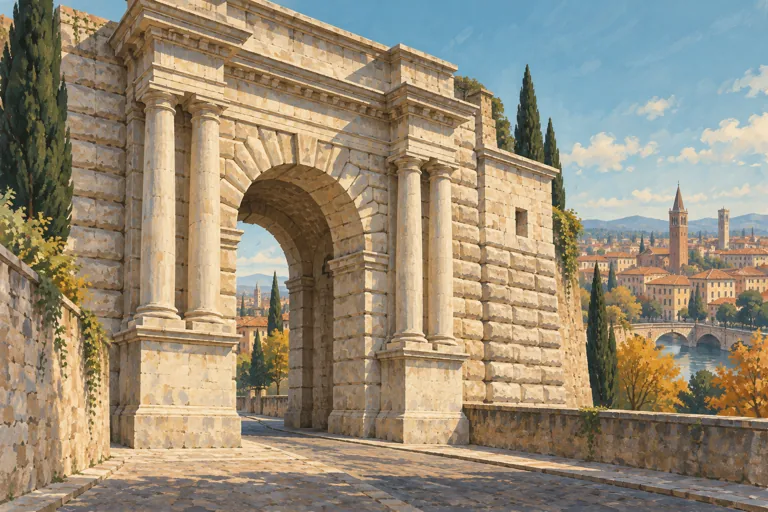
The official Verona visitor guide describes it as an important imperial-era entrance associated with the Via Postumia. It dates the visible gate to the first century CE and explains that it belonged to a larger rectangular complex with two fronts and an intervening courtyard. What catches your eye today is therefore part of a more substantial arrangement.
Look at the openings before the ornament
Begin with the two large passages at street level. Their scale helps you think about movement: people, animals and goods passing through a controlled entrance. Then raise your eyes to the smaller openings above. Notice how the façade balances large practical voids with a repeated architectural rhythm. You can enjoy that composition without needing to identify every decorative element immediately.
Move a little to one side, where it is safe and does not obstruct anyone. A frontal photograph compresses a building into a surface; an angled view can make its thickness and relationship with the surrounding street easier to understand. Stay on appropriate pedestrian routes and avoid stepping backward into traffic while watching through a phone.
Imagine the missing parts cautiously
The gateway’s larger plan is important, but it is also a reason to distinguish evidence from imagination. The surviving façade does not give you permission to invent the height, color or precise appearance of everything once behind it. Use the official explanation or a guide’s supported plan to establish the basic arrangement, then leave uncertain details uncertain.
A helpful exercise is to divide your observations into three kinds. First, what can you see directly? Second, what does a reliable explanation tell you? Third, what are you imagining to connect the two? Keeping those categories separate makes an archaeological visit more interesting, because it reveals how interpretation is built rather than presenting the past as a finished film.
Our Roman Verona guide offers a wider framework for that exercise. The city’s ancient remains served different purposes: circulation, defence, entertainment and public life. A gate should not be read as a smaller version of an amphitheatre simply because both use arches.
Follow the street into the city
Visit Verona connects the entrance with the principal east–west street leading toward the Roman forum, at today’s Piazza delle Erbe. Walk that relationship slowly rather than drawing an exact ancient boundary from modern shopfronts. Street alignments can preserve an older idea while the buildings, surfaces and uses around them change repeatedly.
Our Piazza delle Erbe article helps you continue the story once you reach the square. Look for differences of scale, material and purpose rather than searching for a single “authentic” period. A living historic city contains many layers at once, and later additions are part of its history rather than interruptions to it.
Let names reveal changing uses
The official guide records earlier names including Porta Iovia and Porta San Zeno, and relates Borsari to the collection of duties. A name can preserve a function or association from a period quite different from the building’s construction. That makes naming a useful historical clue, but not a substitute for examining the structure itself.
Try the same question elsewhere during your walk: does the present name describe what you see, a former use, a person or a local tradition? You do not need to resolve every example on the spot. Make a note and check it later. This turns a familiar-looking street into a series of small research questions rather than a route between obvious attractions.
Keep the stop manageable
Porta Borsari works well as one focused pause within a broader walk. Choose a comfortable place to stop, give everyone a moment to look upward and then compare one observation each. With children, ask them to find a repeated shape rather than reciting dates. With an architecture enthusiast, spend longer on how the openings relate to the surrounding wall.
If you want a different kind of surviving and reconstructed structure afterward, use our Ponte Pietra walking guide. Check the route against your group’s walking comfort and leave space for a rest. The pleasure of connecting places disappears quickly when every pause feels like a delay.
Browse the Verona walking tour collection if you would value a guide who can explain the gate within the city plan. Confirm the actual route and any included admissions. A walking tour past the Arena, a ticket to inspect its interior and a seat at an opera are separate experiences; our Arena booking comparison explains the difference.
By the end of the walk, the gate may seem less like an isolated stone screen and more like a hinge between a road and a city. That is enough for a successful stop: a visible detail, a supported piece of history and a clearer sense of how Verona’s streets carry earlier patterns into the present.
Sources & further reading
Turn a good read into a great day.
Find a highly rated Veronese experience that brings these stories to life.
Explore related experiences →