Verona’s Loggia del Consiglio: what can you read from Piazza dei Signori?

Piazza dei Signori gives Verona’s Loggia del Consiglio something a museum gallery cannot provide: its surrounding civic conversation. Before concentrating on a carved detail, stand where you can see the building in relation to the square. Its repeated arches and ordered upper storey make a different statement from a tower or a fortified residence. The most useful opening question is not simply “how old is it?”, but “what kind of public presence was this building designed to have?”
What history can you establish from the official record?
Visit Verona’s account of the Loggia dates its construction to 1476–1493 for the city council during Venetian rule. It also cautions against the traditional attribution to Fra Giocondo. A familiar nickname or repeated attribution does not become firm evidence through repetition. Keep the documented purpose and date range separate from a name that the official account does not accept as the architect.
The same account describes significant later changes, including nineteenth-century work. The painted decoration visible on the façade belongs to that later history rather than providing an untouched view of the fifteenth century. This is an especially useful distinction when a building looks pleasingly unified. Visual harmony can be the result of repair, reinterpretation and deliberate presentation across time. It does not require every component to share one birthday.
Rather than trying to memorise every intervention, hold two ideas together: a Renaissance civic building and a later history of adapting and representing it. That gives you a more flexible way to look. When you notice a detail, ask whether you know its date or merely feel that it belongs. The answer “I need to check” is a good observation, not a failure of appreciation.
How can you read the façade without a technical vocabulary?
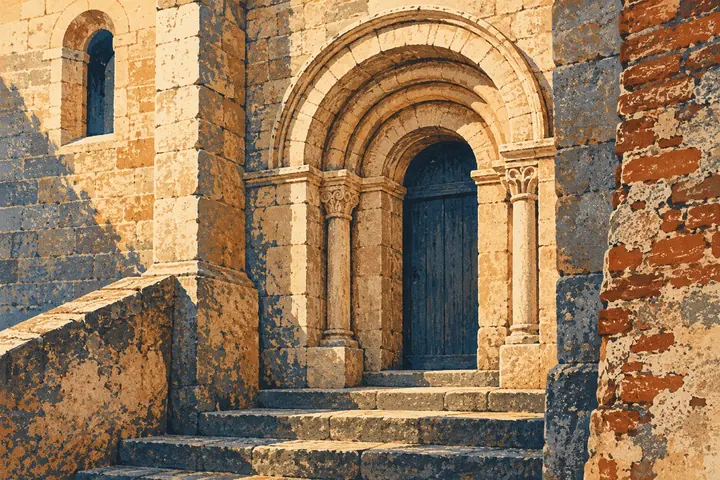
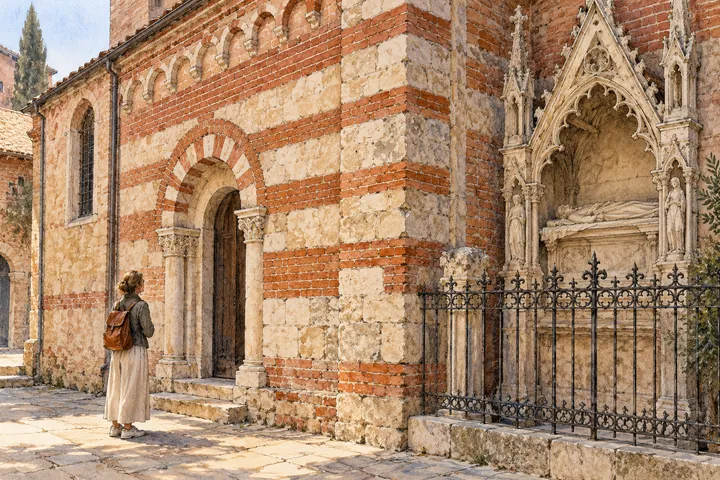
Begin with the openings. Follow the rhythm of the arcade across the ground level, then look at the upper windows. Notice the alternation between solid surfaces and openings, the shadows under the arches, and the way horizontal lines hold the composition together. You do not need to identify every moulding to recognise that repetition can create a sense of order.
Now choose one column or one window and compare it with its neighbour. What repeats exactly, and what changes because of light, viewpoint or surrounding detail? This is a more revealing exercise than collecting a photograph of every part. It also helps you distinguish the building’s form from the temporary conditions of the visit: people passing, equipment for an event, or a patch of shade are part of today’s experience, not necessarily part of the architectural design.
Stay in a comfortable public position and leave room for others. The square is a shared place, not a private viewing platform. If a group is gathered, move to a different vantage point rather than backing into its path. A façade can reward returning to it later in the walk, when both the light and your understanding of the surrounding buildings have changed.
Why should you look around the square as well?
The official Piazza dei Signori guide places the square within Verona’s history of civic and political power. Use that context as an invitation to compare forms, not as a reason to compress every building into one era. A tower, an arcade and a palace front perform different visual jobs even when they share the same public space.
Our guide to Santa Maria Antica beside the Scaliger tombs extends the walk towards a different relationship between a building and its neighbours. Piazza delle Erbe’s changing architecture offers another way to see several periods operating together. Give each place its own question instead of making the walk a contest to name everything first.
For a longer comparison, Palazzo Barbieri’s classical language shows another civic institution presenting itself through architecture. On a journey that includes Turin, Palazzo Barolo also rewards separating a building’s history from the particular visitor route available now. The comparison is about how to plan and look; it does not make the buildings interchangeable.
Can you expect to go inside the Loggia?
Do not assume ordinary walk-in museum access. Visit Verona describes current institutional and cultural uses, so an advertised event or authorised visit needs its own confirmation. A general description of historic rooms is not an admission offer. If interior access is the main purpose of your trip, find a current programme and check the date, booking requirement and areas actually included.
An exterior-focused visit can be complete in itself. If you prefer interpretation from a guide, compare the named route and meeting point in our Verona experience collection; a city walk may discuss the Loggia without entering it. Leave with one clear distinction between original purpose and later appearance, and one façade detail you have genuinely noticed. That is a substantial encounter with the building, even if its doors remain closed.
Sources & further reading
Turn a good read into a great day.
Find a highly rated Veronese experience that brings these stories to life.
Explore related experiences →