How do you read Piazza delle Erbe’s changing architecture?

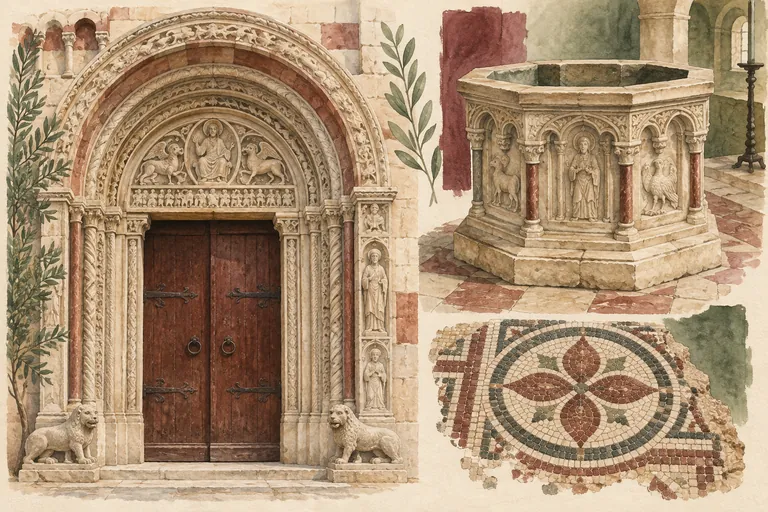
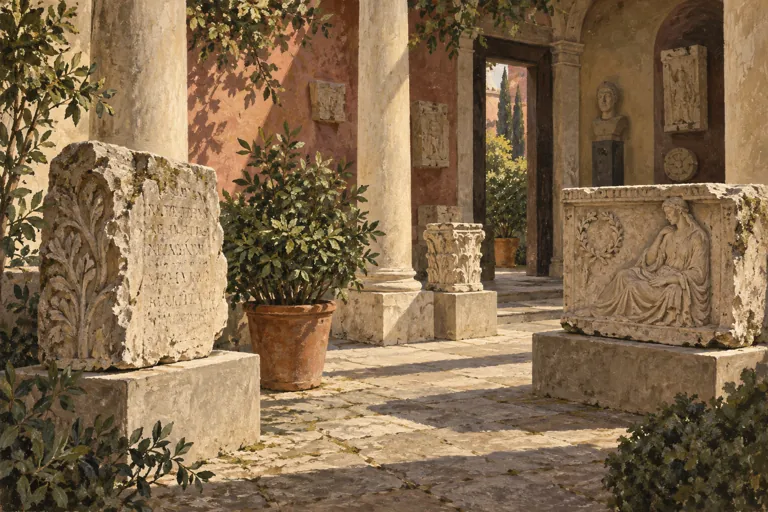
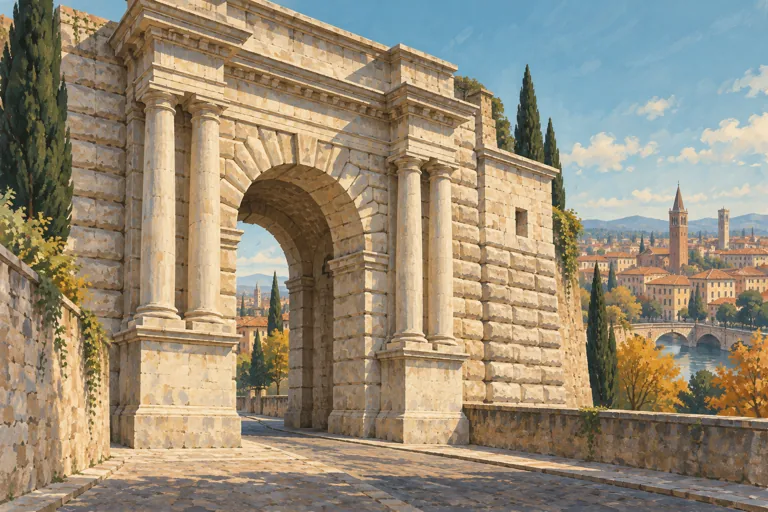
Piazza delle Erbe rewards a slower question than “Which building is oldest?” Ask instead how different generations altered the same public space. A Roman setting, medieval civic life, painted Renaissance facades and later restorations can all be present without forming one untouched historical scene. The square is most interesting when you allow those layers to remain distinct.
Start with our guide to Roman Verona beyond the Arena, then bring that larger map into the square. You do not need to identify every feature correctly on the first pass. A short walk with two or three careful observations is more useful than memorizing a crowded list of dates.
Separate the ancient location from today’s buildings
Visit Verona identifies Piazza delle Erbe as occupying the area of the Roman forum. Its official introduction also describes the mixture of buildings around the square, including Palazzo Maffei, the civic buildings and the painted Mazzanti houses. The ancient role of the place does not make every visible wall Roman.
Begin by noticing the space between the buildings. Where do streets enter, where do people pause, and which facades command attention? Then examine one elevation rather than swiveling between everything at once. Look for changes in window spacing, materials and decoration. These are clues to investigate, not automatic proof that two neighboring features belong to different centuries.
Look upward at the painted houses
The Mazzanti houses are a particularly good reason to lift your gaze above the café level. The tourism office describes their Renaissance painted facades as surviving examples of the decorative practice associated with Verona’s identity as a painted city. Its Mazzanti houses page also states that the interiors cannot be visited. Enjoy the exterior without treating a private doorway as a museum entrance.
Try looking twice: first from far enough away to see how color organizes the frontage, then from a different public position to notice a surviving detail. Light and shade can make the same painted patch easier or harder to read. Avoid inferring the complete original scheme from a small remnant; the incomplete survival is part of what you are observing.
A fountain can hold more than one period
The municipality’s account of the square dates the Madonna Verona fountain to 1368 and identifies the crowning figure as an ancient Roman statue with later completions. It also distinguishes the sixteenth-century Saint Mark column from the present lion added in 1886. These examples in the municipal square guide show why an object can have more than one meaningful date.
Use that idea as a looking exercise. Ask whether a feature was newly made, reused, repaired or commemorated. A label saying “Roman” may describe one component rather than the whole ensemble. You can appreciate the visual unity of a monument while still recognizing that its parts arrived through different decisions.
Restoration is another historical layer
The civic museums’ architectural account notes that the present appearance of the Domus Mercatorum owes much to stylistic work at the end of the nineteenth century. It also identifies the nineteenth-century facade of the Palazzo della Ragione. Consult the Musei Civici account when you want to distinguish an institution’s older history from the age of what you see.
This is not a reason to dismiss a restored building. It gives you another question: what did later generations want their city’s past to look like? Our Castelvecchio guide offers a related way to think about historical architecture and the later choices that shape a visitor’s experience.
Give the square a place in a manageable walk
Choose a quiet edge for your first look and keep pedestrian routes clear when stopping for photographs. Let the square be one substantial pause, then continue only as far as your group’s energy allows. Our Ponte Pietra walk provides a useful next subject rather than another list to rush through.
If you prefer a guide, compare our Verona walking experiences by route, duration and stated stops. A square on an itinerary does not guarantee entry to every surrounding building. For a later comparison between northern Italian civic spaces, Turin’s Piazza Castello guide introduces a different relationship between public space and monumental power.
Keep the public square and the buildings around it distinct in your plans. Exterior looking can fit a flexible walk; a museum interior may need its own ticket, opening check and longer visit. Choose one such interior deliberately if you want it, rather than assuming you can step into every interesting doorway along the way.
Leave Piazza delle Erbe with a few specific observations: a painted surface, a reused figure, a facade whose appearance is later than its institution. Those details give the square depth. They also leave room for the everyday life around you, which is part of the pleasure of reading architecture in a city that is still being used.
Sources & further reading
Turn a good read into a great day.
Find a highly rated Veronese experience that brings these stories to life.
Explore related experiences →