A slow walk through Veronetta: streets, woodwork and the river

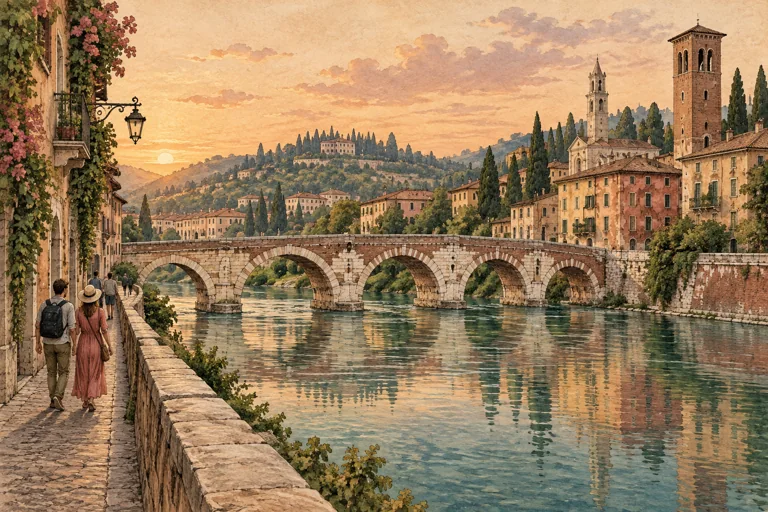
Veronetta offers a rewarding change of pace after Verona’s busiest central sights. Cross the Adige with the intention of exploring a neighborhood, not merely collecting another monument, and ordinary details begin to matter: the scale of a doorway, the rhythm of a street, the interval between a church and the river. Keep the route modest enough to notice them.
A useful approach is to choose one interior you genuinely want to see, then let the surrounding walk remain flexible. Santa Maria in Organo makes a strong focus for anyone interested in craftsmanship. Other major attractions in this part of the city deserve their own time; they need not all become compulsory stops on the same afternoon.
Begin by understanding where you are walking
Use a current map to connect your accommodation or arrival point with the streets around Santa Maria in Organo and a suitable river crossing. Look at the return as carefully as the outward journey. A compact neighborhood walk can become tiring if the final destination is still a long way from dinner or the station.
Leave the sequence open to what you find. Services, temporary works and ordinary neighborhood activity may change the practical route. Walk on public paths, use designated crossings and avoid stopping a group in a narrow doorway. The aim is to experience a lived-in part of Verona without treating the people who live there as scenery.
Let woodwork become the main subject
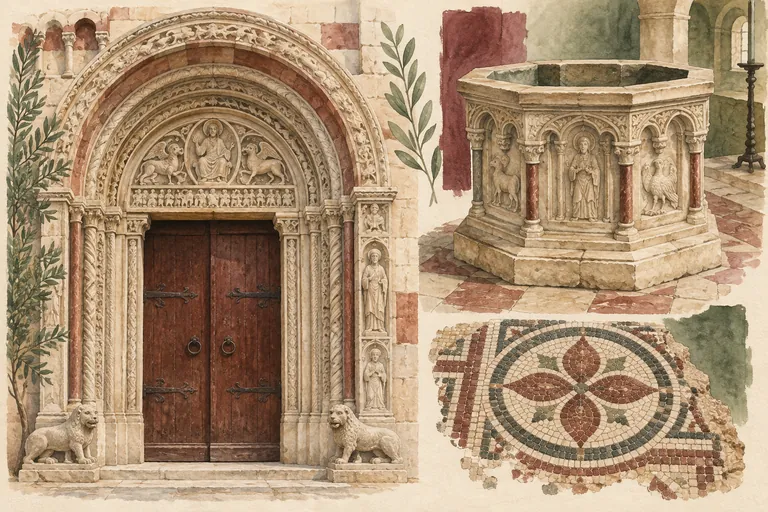
The municipal account of Santa Maria in Organo highlights the work of Fra Giovanni da Verona, including wood inlay associated with the choir and sacristy furnishings. The city’s visitor information also emphasizes this craftsmanship. The interest lies partly in what wood can be made to suggest: depth, shape and carefully organized space.
If the relevant rooms are open to visitors, start by identifying the actual material. From a distance, an illusionistic surface can look surprisingly close to painting. Move only as the permitted route allows, and look for the joins between differently coloured pieces. Do not touch the work or lean over barriers to solve the puzzle.
Then consider the furniture’s purpose. A choir stall or cupboard has a practical role as well as a decorative surface. Looking at both changes the question from “Is this beautiful?” to “How did a maker make a useful object so visually absorbing?” You can appreciate the ingenuity without claiming to know every depicted object or symbol.
Check interior access before making it the centrepiece
A church can be open for worship without every historic room being available for sightseeing. Confirm the current visitor arrangements, especially if the woodwork is your main reason for coming. Do not infer access to the choir or sacristy from a general opening notice for the church.
Respect services, photography rules and any request to wait. If an interior is unavailable, let the walk remain worthwhile rather than pressing for an exception. Observe the exterior from public space, enjoy the neighborhood and return at a confirmed visiting time if the rest of your itinerary allows.
For anyone with limited mobility, ask about the specific entrance and the route to the rooms you hope to see. A step-free doorway does not automatically establish that every part of a historic building is accessible. The same care applies to the walk: choose a distance, surface and number of breaks that suit the group.
Choose one addition, then stop adding
Our guide to Ponte Pietra gives the river crossing its own historical interest. If theatre archaeology is your priority instead, read our Roman Theatre guide and reserve sufficient time for that separate visit. Neither a performance nor a museum admission should be assumed to be included in a neighborhood walk.
Giardino Giusti offers another possible focus, but adding a garden, an archaeological museum and a church can overwhelm a short afternoon. Pick the attraction that best fits your interests and energy. A pause beside the river may be more useful than a third ticket.
Make the walk personal without making it complicated
Compare Verona walking experiences by their named route and meeting point. If Santa Maria in Organo matters to you, ask whether entry to the relevant spaces is confirmed rather than assuming that “Veronetta” includes every interior. A private guide may help tailor the focus, but the description and confirmation still govern access.
For a broader craft-minded journey, the Milan guide to looking at garment construction applies a similar habit to another material. Notice how things are assembled, distinguish function from ornament and ask informed questions. In Veronetta, that attentive approach turns a manageable walk into a richer encounter with the city.
Sources & further reading
Turn a good read into a great day.
Find a highly rated Veronese experience that brings these stories to life.
Explore related experiences →