Verona’s Porta San Zeno: what can brick and stone reveal about a city gateway?

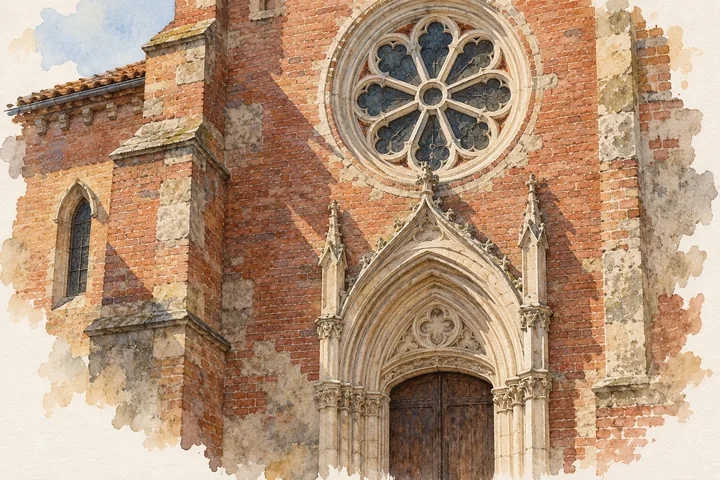
Porta San Zeno offers a satisfying Verona exercise: stand in a safe public position and ask what changes when a gateway uses red brick alongside pale stone. The contrast makes the structure easy to look at carefully. Follow the arch, the framing of openings and the horizontal divisions before reaching for a date or an architect’s name.
This is a visit to a city gateway, separate from the Basilica of San Zeno and separate again from Verona’s railway stations. The shared names can make an itinerary sound simpler than it is. Put the precise monument into your map, check the walking route and allow yourself to treat it as a focused outdoor stop.
Start with materials, then ask about meaning
Visit Verona’s description of Porta San Zeno attributes the gateway to Michele Sanmicheli and places its construction in the early 1540s. It notes the prominent use of brick alongside stone and suggests an economic explanation for the material choice. That suggestion is useful, but it should remain a qualified interpretation rather than a universal rule that brick always means a cheap building.
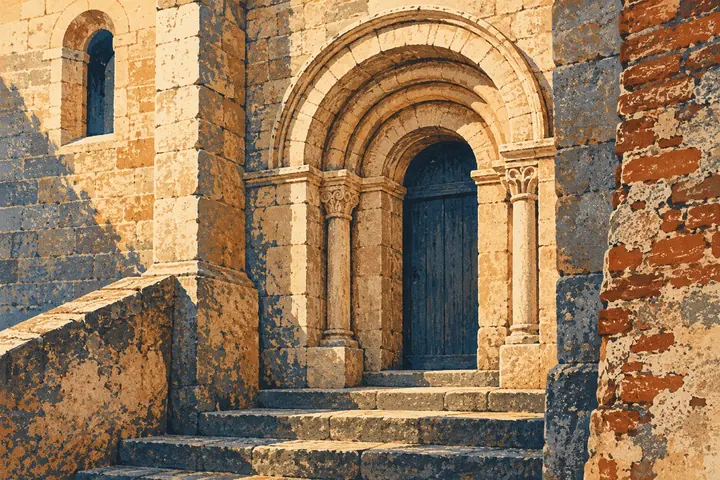
Look at what the materials do visually. The stone details can help the eye find a passage or a division in the façade, while broad brick surfaces provide a different texture and colour. Those observations are yours to make; a claim about the architect’s intention needs stronger evidence. Keeping the two apart makes architectural looking more enjoyable, because you can notice freely without pretending to know everything.
A passage was also a controlled threshold
A gateway joins two sides of a boundary while making movement pass through a particular place. Visit Verona describes a central passage with spaces alongside it, including accommodation for guards. That practical role is worth remembering when the building begins to look like a decorative triumphal arch.
The national cultural heritage catalogue also records the monument and its association with Sanmicheli. Use these accounts to anchor the historical identification, then consider the distinction between ceremonial appearance and everyday function. Who needed to pass through? How might a doorway announce authority? Those are productive questions, even when a short exterior visit cannot answer all of them.
Do not infer that an opening visible from outside is currently a public route into the building. A historic passage, a modern doorway and an accessible interior are three different things. Follow signs and barriers, and keep clear of entrances in use.
Compare gateways without making them identical
Our guide to Porta Palio offers another way into Verona’s Renaissance gateways. If you see both, choose one detail to compare: the balance between solid wall and openings, the treatment of a central arch, or the contrast between approaches. A small comparison is often more revealing than trying to rank one monument above another.
The Porta Nuova monument supplies a further example, but remember that its name is also attached to the railway station. On a longer northern Italy journey, Turin’s Roman Porta Palatina provides a comparison across a much greater distance in time. It is a different city and period, not another part of Verona’s Renaissance defences.
Understand the carnival connection separately
Porta San Zeno also has a continuing association with the Bacanal del Gnoco. The organisation’s headquarters page identifies the gateway as its base. This is a useful example of a historic building acquiring a later civic role rather than remaining fixed at the moment of its construction.
That association does not establish ordinary visitor opening, an exhibition admission or the date of a future carnival event. Consult the organiser’s current programme if you want to attend something specific, and do not turn an older page heading into next year’s schedule. Looking at the exterior and attending an organised event are separate plans, each worthwhile on its own terms.
Give the stop a sensible place in your day
The nearby district can be explored with the Basilica of San Zeno as a separate anchor. Check the basilica’s visitor arrangements independently; seeing the gateway does not include church admission. Leave time for the streets between your stops rather than assuming that a matching name means a shared entrance.
At the monument, take account of present-day traffic and crossings. Choose a safe viewing position and use the pedestrian route available on the day. A façade is not worth stepping into a road for, and an old photograph may show a different circulation pattern. If the light makes one surface hard to read, change your angle from a safe place or return later instead of chasing an ideal photograph.
Compare the route and named stops in our Verona experience collection if you would like guided context. A general city walk may not include this gateway, and an Arena sightseeing visit is a different product again from a performance. Porta San Zeno needs neither a dramatic access claim nor a packed schedule: a little historical grounding and careful looking are enough to make its brick and stone worth your attention.
Sources & further reading
Turn a good read into a great day.
Find a highly rated Veronese experience that brings these stories to life.
Explore related experiences →