How should you explore Verona’s Miniscalchi-Erizzo Museum?

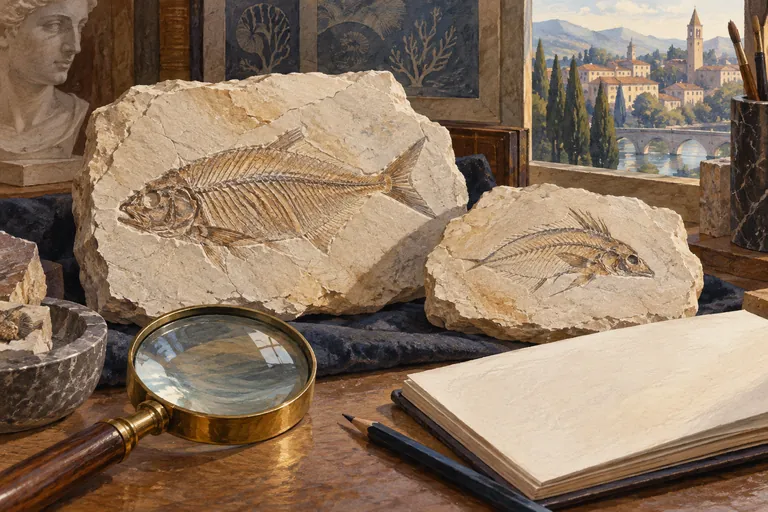
Verona’s Miniscalchi-Erizzo Museum invites a kind of visit that is easy to overlook in a city of famous monuments. Instead of concentrating on one artist or one period, it presents varied collections within a historic residence. The enjoyable challenge is finding connections without forcing everything into a single story. A bronze object, a porcelain piece and a drawing may reward three different ways of looking.
The foundation describes the transformation of an aristocratic home into a museum intended for scholars and the public. Its collection categories range from paintings and archaeology to arms, ceramics, furniture and works on paper. That range is an invitation to choose, not an obligation to remember the contents of every case.
Choose three things, not thirty
Before entering, decide that you will give three objects your full attention. They do not have to be the most prominent or the oldest. One might attract you through colour, another through an unfamiliar shape, and a third through a label that raises a question. You can still enjoy everything between them, but you have given your visit a manageable centre.
At the first object, identify what you can see before reading about it. Is its surface smooth or irregular? Is it symmetrical? Does it appear designed to stand alone, hang somewhere or fit into a larger arrangement? Then let the label correct your assumptions. Being surprised by an object’s function is one of the pleasures of a mixed collection.
Use material as a bridge
If the subjects feel disconnected, follow a material. Metal can be cast, hammered, decorated or polished; ceramic can carry colour and pattern in very different ways. You do not need to diagnose a technique from a distance. Ask what the interpretation tells you, and distinguish that information from your visual impression.
A useful exercise is to compare two objects that seem unrelated but share a material. Which one uses a large uninterrupted surface, and which breaks its surface into details? How does the lighting affect each? Keep to the permitted viewing distance and never touch a case or object to make the comparison. Your eyes can do more than you might expect when you give them time.
Notice the house around the collection
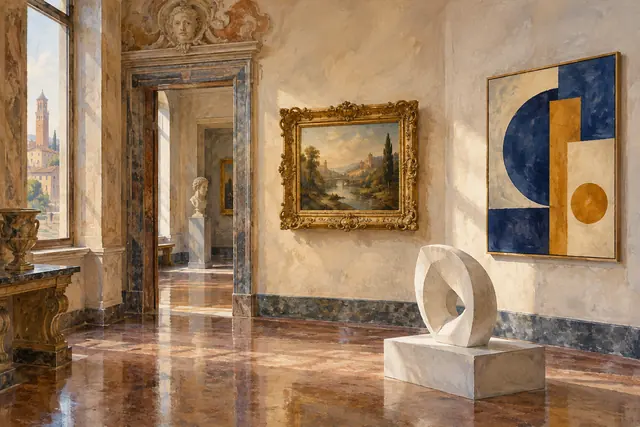
A historic residence influences the experience of its contents. Moving through a doorway can change the scale of a room, the direction of light and the relationship between objects. Pause occasionally to look at the setting as a whole. Then return to a single item. Alternating between those two distances can prevent the visit from becoming a long sequence of labels.
Do not assume that every object has always occupied its present position or that every room reproduces one precise domestic moment. Those are historical questions for the museum’s interpretation. Our guide to Palazzo Maffei offers a different way to think about art within an architectural setting, while Castelvecchio introduces another distinctive relationship between building and collection.
Make room for unfamiliar subjects
The foundation’s list includes categories that some visitors may know little about, such as small plaques or Russian icons. You do not have to acquire specialist knowledge during one afternoon. Choose a basic question—how was this displayed, handled or understood?—and see whether the label or a guide can answer it. If the evidence is incomplete, leaving the question open is better than inventing an explanation.
For a contrasting collection organised around ancient inscriptions and stone, consider the Museo Lapidario Maffeiano on another part of your Verona itinerary. The comparison works best when each museum has its own time, rather than becoming a contest to fit in the largest number of admissions.
Check the calendar before setting out
The museum’s visitor information lists its address on Via San Mamaso and its opening arrangements, including a break between morning and afternoon sessions. Check the current schedule and last admission before travelling. A quiet weekday does not guarantee the doors will be open. For groups or particular access requirements, confirm arrangements directly with the museum rather than assuming that an ordinary ticket covers a special visit.
On a separate Milan stay, Casa Museo Boschi Di Stefano provides another collecting story within domestic space. In Verona, browse arts and culture experiences if you would value a guide, checking which museum the description actually includes. Finish this visit by recalling your three objects. Being able to explain what interested you about them is a more satisfying souvenir than a camera roll you cannot later identify.
Sources & further reading
Turn a good read into a great day.
Find a highly rated Veronese experience that brings these stories to life.
Explore related experiences →