What should you eat in Verona beyond the familiar Italian menu?
A good food day in Verona begins by resisting the idea that every Italian city serves the same story. Familiar dishes may be available, but the more interesting question is what local ingredients, techniques and habits reveal about this particular place. You can explore that through a restaurant meal, a guided tasting walk or a cooking class. The right format depends on whether you want to taste widely, ask questions or make something yourself.
Start with a regional question
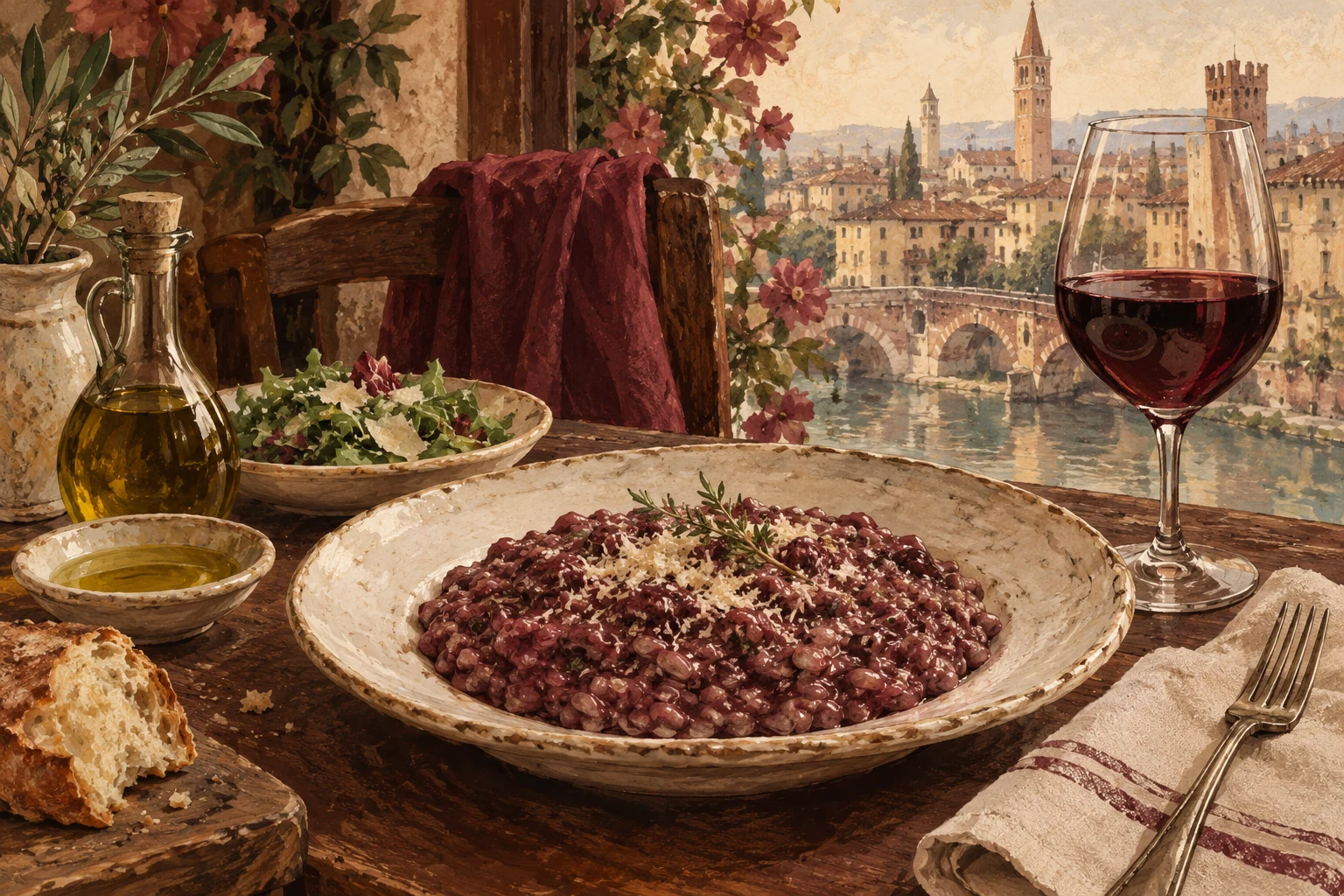
Rice and wine offer a useful opening. Risotto all’Amarone connects a dish with the nearby wine landscape; the Valpolicella consortium has discussed its place in Verona’s food heritage. That does not mean every restaurant prepares the same version or that ordering it answers every culinary question. Ask how the dish is made, which ingredients the kitchen emphasizes and whether the serving fits the rest of your meal.
Menus are useful evidence when read carefully. Look for descriptions rather than assuming a familiar word guarantees a particular preparation. Regional food traditions contain variation, and restaurants also make contemporary choices. Curiosity works better than a rigid hunt for one supposedly definitive version of a dish.
Choose a tasting walk when context matters
A food walk can be valuable because it connects several tastes with a neighborhood and a person who can explain them. Compare the number and type of stops, group size, walking distance and what is included. A long list of tastings is not automatically better than a shorter, more coherent route. The guide’s ability to connect ingredients and places may matter more than the sheer amount of food.
Our Verona food and wine experiences include different formats. Read whether the portions replace a meal and whether drinks are included. Ask about dietary needs before booking. A tour may be able to adapt some stops but not every ingredient, and the answer needs to come from the actual operator rather than from a general description of Italian cuisine.
Choose a class when you want to participate
A cooking class gives the day a different centre of gravity. You remain in one setting, handle ingredients and learn through repetition rather than moving between venues. Look for a clear explanation of what you will make, how much hands-on participation is involved and whether the class ends with a meal. The group size can affect how much individual instruction you receive.
Do not assume that a class title describes an exclusively Veronese menu. Some experiences teach broadly Italian dishes. That can still be enjoyable, as long as you choose it for the right reason. Our private-experience guide discusses questions about pace, format and inclusions that are useful for group classes too.
Let wine support the meal
A wine list can introduce the surrounding region, but drinking is optional rather than a requirement for cultural participation. Ask about nonalcoholic alternatives and whether a tasting format suits everyone in your party. If wine is the main interest, a dedicated visit may provide more context than trying to turn every restaurant course into a lesson.
Read our Valpolicella guide before choosing a countryside excursion. A city tasting and a winery visit are different products with different travel needs. Verify the departure location and transport, and arrange the day so nobody has to drive after drinking.
Build appetite into the itinerary
A practical food plan leaves room between substantial meals. A morning tasting walk, large lunch and early cooking class may look attractive separately but become uncomfortable together. Decide which experience is the main event and keep the surrounding meals lighter. Water, a seat and a little unclaimed time are useful ingredients too.
Our day-planning page can help you shape a visit around one culinary anchor. If your journey continues to Bologna, the sister Bologna dining guide offers a rewarding comparison. Look for differences in local emphasis rather than expecting one city’s food to validate another’s reputation.
Bring useful questions to the table
Ask what is seasonal, what the kitchen considers local and which dish works well for the appetite you actually have. Ask about allergens directly instead of inferring safety from a short menu description. If a dish is unfamiliar, a clear explanation is more helpful than ordering from a photograph alone. Food becomes a richer part of travel when conversation accompanies the tasting and the meal fits comfortably into the rest of your day.
Sources & further reading
Turn a good read into a great day.
Find a highly rated Veronese experience that brings these stories to life.
Explore related experiences →