Riso Nano Vialone Veronese: what does a rice label add to a Verona meal?

A bowl of risotto can connect a Verona meal with a landscape that many city visitors never see. The connection becomes more precise when you ask which rice is being used. “Risotto” describes a preparation, while Vialone Nano identifies a rice variety and Riso Nano Vialone Veronese IGP names a protected product. Those terms belong to different parts of the story.
The protection consortium’s official account explains the relationship between the selected Vialone Nano variety, production requirements and a defined area in the province of Verona. Reading that information can turn a familiar menu choice into a useful conversation about farming and cooking, without requiring every meal to become a technical seminar.
Separate a variety from a protected origin
A variety name alone does not establish that a particular bag or restaurant portion carries the protected geographical indication. If that distinction interests you, ask for the full product name or look at the packaging. Keep the answer attached to the rice actually used, rather than assuming that a restaurant’s location supplies the missing information.
The consortium identifies twenty-four municipalities in the production territory, including Isola della Scala. This places the agricultural story beyond Verona’s historic center. A city meal can introduce that wider landscape, but eating risotto near the Arena does not mean the grain was grown inside the city or that every rice dish on the menu uses the same product.
Think about water as managed work
The consortium describes cultivation involving regulated water and periods of flooding and drying. That is a useful corrective to the simple postcard image of a permanently flooded field. A rice-growing landscape is worked through changing stages, and what a visitor sees depends on the season, weather and decisions made by growers.
At the table, this background can prompt a better question than “Is this local?” You might ask where the rice comes from or whether the kitchen regularly works with a particular producer. The answer may be brief, but it creates a specific link between the meal and its ingredients. Avoid expecting serving staff to provide a full agricultural lecture during a busy service.
Notice the grain within the dish
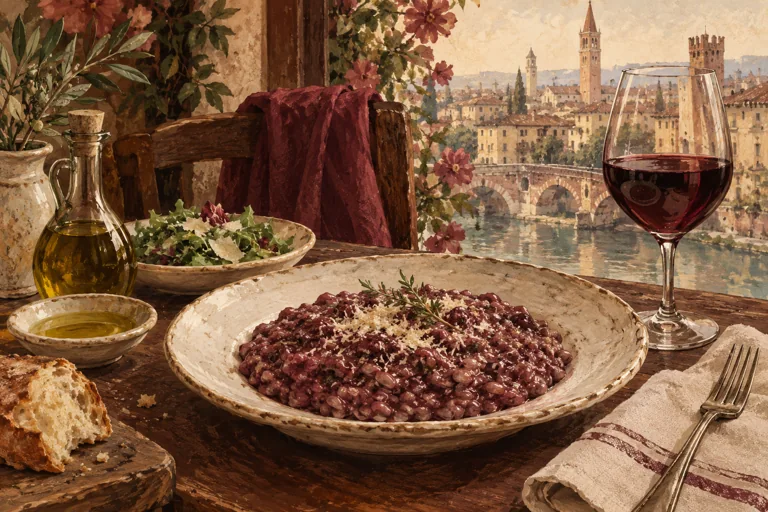
Begin with a small taste before concentrating on the strongest topping or accompaniment. Notice how the grains remain perceptible within the surrounding texture, how the dish moves on the plate and how the flavor changes as it cools. These are observations you can make without declaring a universal rule for every cook’s technique.
The consortium’s recipe collection offers examples of ways the rice is used. A recipe is one expression of the ingredient, not proof that every restaurant follows an identical method. Our guide to Verona’s food beyond the familiar menu encourages treating regional names as invitations to ask more, rather than shortcuts around the actual dish.
Ask about the whole preparation
The rice name cannot tell you everything about a risotto’s broth, fat, cheese, wine or other additions. If ingredients, allergies or dietary preferences matter, ask about the complete preparation and any relevant cross-contact. Do not assume that a plain-looking dish is suitable simply because its main ingredient is recognizable.
A wine reference on a menu deserves the same care. Our article explaining Ripasso and Amarone distinguishes related terms without treating them as interchangeable. The wider habit is useful across a meal: names carry information, but they work best when connected to the particular bottle, ingredient or cooking process in front of you.
Plan a producer visit as a separate outing
If the agricultural background interests you, investigate a visit beyond the city through the producer or organizer. Confirm the exact address, public access, language, activity and transport. A shop, a working mill and a guided farm visit are different things, and a regional name does not establish a departure from central Verona.
Do not expect a particular stage of cultivation on demand. Ask what can actually be seen on your date, and whether the visit requires advance arrangements. Our two-day Verona planning guide can help you decide whether an excursion fits without displacing the city visit you wanted.
For a comparison on a wider northern Italy itinerary, learning about fresh pasta in Bologna explores another relationship between ingredients and technique. Browse the Verona dining collection for explicitly described experiences. Even if you stay entirely in the city, one well-chosen question about rice can make a simple bowl feel connected to a much larger place.
Sources & further reading
Turn a good read into a great day.
Find a highly rated Veronese experience that brings these stories to life.
Explore related experiences →